301 darts rules vs 501 darts rules, explained
The 301 darts rules and the 501 rules are the same game at two lengths: start from a fixed total, subtract what you score, and land on exactly zero with a double. 301 is the shorter pub version, traditionally played double-in. 501 is the professional format, played straight-in.
301 darts rules, step by step
Everyone starts on 301. You throw three darts a turn, the total comes off your score, and the first player to reach exactly zero wins the leg.
Four settings decide the shape of the game:
- Start rule. 301 is traditionally double-in — nothing counts until one of your darts lands in the doubles ring. Plenty of pubs and leagues play it straight-in instead.
- Finish rule. Double-out. The winning dart has to land in a double, and the 50 bullseye counts as double 25.
- Bust. Go below zero, land on exactly 1, or reach zero with a non-double, and the turn is void.
- The throw. Players bull up — closest to the bullseye throws first — and the throw alternates each leg after that.
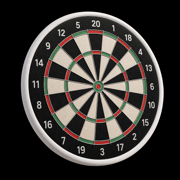
The rest is the board. The thin outer ring doubles a segment and the thin ring partway toward the center trebles it, so 180 is the most you can score with three darts and 170 (treble 20, treble 20, bullseye) is the highest possible finish. If the segment values aren't second nature yet, our guide to dart board scoring walks through them ring by ring.
501 darts rules and how they differ
The 501 darts rules are the 301 rules with 200 more points and one fewer restriction. Professional 501 is straight-in, so your first dart scores whatever it hits and nobody sits on 501 waiting to open. The finish is still double-out and the bust rule is identical, which means 501 darts scoring is the same arithmetic — subtract each visit, watch the leave, finish on a double.
The extra 200 points change how a leg feels rather than how it's counted. A 501 darts game gives you room to throw one bad visit and still build a finishing position. In 301, one bad turn is most of your cushion. 501 is the standard singles format in PDC and WDF play, while 301 has stayed a pub, practice, and casual-league game.
| 301 | 501 | |
|---|---|---|
| Starting score | 301 | 501 |
| Traditional start rule | Double-in, though straight-in is common | Straight-in |
| Finish rule | Double-out | Double-out |
| Fastest possible leg | 6 darts, straight-in | 9 darts |
| Scoring pressure | One bad visit is most of your cushion | Room to recover from a bad visit |
| Where you'll see it | Pubs, practice, large groups | PDC and WDF events, league singles |
Double-in, and why the first darts score nothing
Double-in means your score stays frozen at the starting total until one dart lands in the doubles ring — the thin outer ring, or the 50 bull, which counts as a double. Everything thrown before that scores zero, however good it looked. Hit double 16 with your third dart and 32 comes off; the two darts ahead of it still count for nothing.
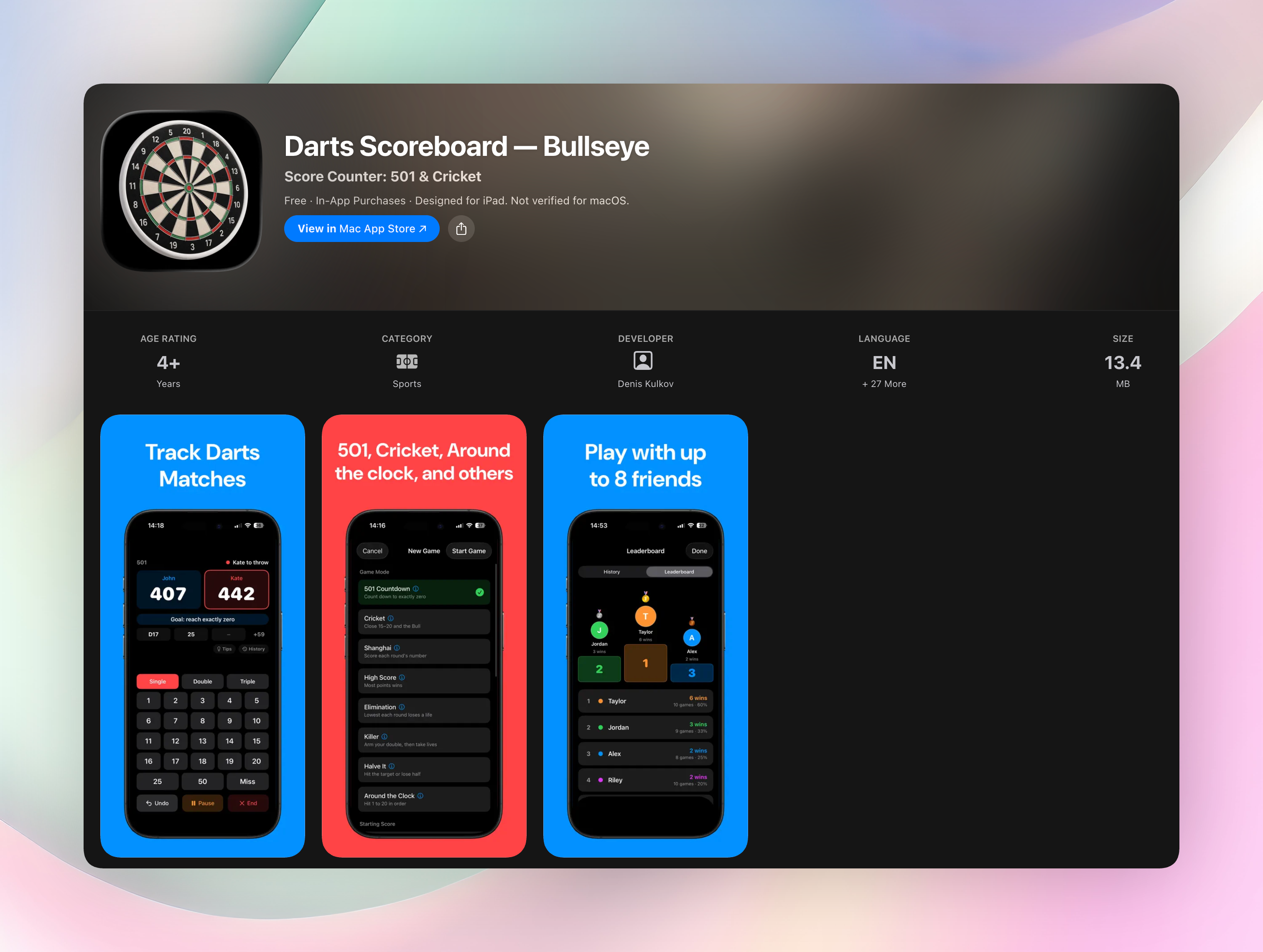
That's the part that catches new scorers out. A double-in leg can run several turns with both players still on their starting number, and the scoreboard has to stay flat through all of it rather than quietly recording trebles that didn't count. Darts Scoreboard is a darts scoreboard app for iPhone that tracks your games, and it has a double-in toggle, so the running total only starts once the rule says it should.
In casual play, whether a night runs darts double in double out or straight-in with a double finish is a house decision. Settle it before the first dart, especially in a knockout.
Double-out darts and the bust rule
Double-out darts is what makes the last 40 points harder than everything before them. Your final dart has to land in a double or the bull, so the endgame is about leaving yourself a number you can actually finish.
There are three ways to bust:
- You go below zero. Sitting on 36 and hitting treble 20 puts you 24 past it.
- You leave exactly 1. There's no double to finish 1 with, so the number is dead.
- You reach zero without a double. From 40, a single 20 leaves 20, and a second single 20 takes you to zero on a single — bust.
A bust voids the whole turn. Your score reverts to whatever it was when you stepped to the line, and any darts you had left are forfeited.
In practice, that means steering toward even leaves and doubles you trust. 32 (double 16) and 40 (double 20) are the standard targets, and 32 is the friendlier: miss into the single bed and you're left with 16, then 8, then 4 — every miss still leaves a double. Seven numbers under 170 can't be checked out in three darts at all: 169, 168, 166, 165, 163, 162 and 159. Our breakdown of darts scoring goes further into reading leaves and picking a checkout route.
Legs, sets, and best-of formats
A leg is one complete game from the starting total to zero. A match is normally best of an odd number of legs — best of five means first to three — so there's no draw.
Set play adds a layer. A set is itself a best-of-legs mini-match, most often best of five legs, and the match is a best-of-sets. The PDC World Championship runs on sets; most other televised events and nearly all league nights use straight legs.
The throw alternates leg by leg: whoever didn't start the previous leg starts the next one. In set play the first throw of each new set alternates as well, so the player who opened set one opens set three. For a casual night with a queue of players, best of three or five legs of 301 keeps everyone moving.
Which starting total to pick
Player count and patience decide this more than skill does.
- Four or more players, or a rotating queue. 301, straight-in, double-out. Legs finish fast and nobody stands around for twenty minutes.
- Singles or pairs who want a real game. 501, straight-in, double-out. Anyone learning how to play 501 darts is learning the format the pros and the leagues use.
- Complete beginners. 301, straight-in. Stacking double-in on top of double-out means a first-timer can throw thirty darts without moving off 301, which is how people put the darts down for good. Add double-in once doubles start landing. A beginner's guide to darts covers stance and grip.
- Teams of three or four. 701 or 1001, with each team throwing as one player, so everyone gets a meaningful turn.
FAQ
Is 301 or 501 better for beginners?
301, played straight-in and double-out. The shorter total means a beginner actually finishes legs and sees progress, while 501 drags when three-dart scores are low. Double-in is the part to avoid early on, not the starting number.
Do you have to double in on 301?
Only if the house rules say so. Double-in is the traditional pub convention for 301 and many leagues keep it, but plenty of venues and scoring apps default to straight-in. Agree on it before the first leg.
What happens if you go below zero in darts?
The turn is busted. Your score reverts to what it was at the start of that turn, any remaining darts are forfeited, and play passes to your opponent. The same applies if you leave exactly 1 or reach zero on a single or treble.
Does the bullseye count as a double?
Yes. The 50 inner bull is treated as double 25, so it's a legal finish when you have exactly 50 left, and a legal opening dart in a double-in game.
What's the fewest darts you can win a leg in?
Nine in 501 — the nine-darter, most often 180, 180, then a 141 checkout of treble 20, treble 19, double 12. In straight-in 301 the minimum is six darts: 180 followed by a 121 finish.
Free Darts tools
- Darts Checkout CalculatorUse this darts checkout calculator to find the best route from your score, see alternative finishes and choose a preferred double.
- Darts Cricket ScorerTrack every player's marks and points in a live darts cricket scoreboard, with open or closed numbers and the winner shown as the game develops.
- Darts Double Out ChartGenerate a complete darts double out chart from 2 to 170. Choose a preferred finishing double and print a route for every finishable score.
- Darts Match CounterA one-handed darts counter for live 301 and 501 matches. Enter each visit to see remaining scores, averages, checkout routes and leg or set state.
- Darts Score Chart CalculatorUse this darts score chart calculator to turn a selected board number and multiplier into the points scored, including valid outer and inner bull options.